Breaking news: JERA Nex bp opens hydrogen refuelling station in Ostend
03/12/2025
On 7 November 2025, the first-ever hydrogen refuelling station for crew transfer vessels (CTVs) opened its pumps at the Port of Ostend. This six-year R&D project by JERA Nex bp was jointly financed by the European Union and made possible by the support of more than ten partners, including the Port of Ostend itself. A major feat of innovative craftsmanship, and a significant milestone in the process of making offshore operations more sustainable.
How does the hydrogen refuelling station work?
A hydrogen refuelling station works in exactly the same way as a diesel refuelling station. Once delivered, the hydrogen is pumped into a compressor that pressurises the substance, so that ships can refuel quickly and easily. Vessels that sail on hydrogen can then moor by the quayside and refuel using green hydrogen.
VIDEO: Hydrogen Refuellling Station Ostend (c) JERA Nex bp
What makes hydrogen a useful option for sustainable shipping?
Using hydrogen to power ships reduces carbon emissions and helps the maritime sector kick its carbon habit. And that aligns perfectly with the ambitions of JERA Nex bp: aside from developing wind farms and keeping them operational, the company also aims to make its activities as green as possible. As things stand, the hydrogen used by the facility is sourced from renewable electricity in France and Germany.
“Sustainability is in the JERA Nex bp DNA. Last year, we experimented with a charging station for hybrid ships at sea, for example. We also have a range of other innovative projects in the pipeline. Greener offshore industry: that’s what we’re going for!” — Jochem Vermeir, R&D Manager at JERA Nex bp
Who can use the hydrogen refuelling station?
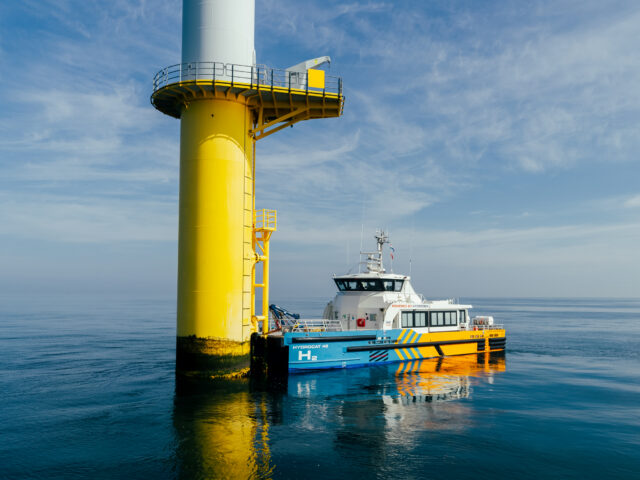
For now, the refuelling station is used only by Windcat’s Hydrocat 48. This crew transfer vessel (CTV) ferries the teams responsible for maintenance work on wind turbines from the port to the offshore farms every day, powered by a double engine that runs partially on diesel, and partially on hydrogen. Even so, the refuelling station is fully equipped to serve multiple vessels a day.
“This hydrogen project was a major investment that we rolled out very deliberately to prove that hydrogen is both a feasible and sustainable alternative source of energy in shipping. To fund the project, we now need more parties to come on board and start using hydrogen.” – Kristof Verlinden, Head of Global O&M at JERA Nex bp
Keen to read more about the added environmental value of innovation at sea?
Read this blog about innovative installation methods